How McNeela Tested Saxophone Bundles to Break Into Google Shopping
Bundles aimed to bridge the value gap in a tough market, revealing what worked, what didn’t, and where future effort is best spent.
Quick Snapshot
The key highlights for busy readers.
The key highlights for busy readers.

1. Problem
McNeela lacked credibility in saxophones and couldn’t compete on price in Google Shopping.
1. Problem
McNeela lacked credibility in saxophones and couldn’t compete on price in Google Shopping.
1. Problem
McNeela lacked credibility in saxophones and couldn’t compete on price in Google Shopping.

2. Strategy
We bundled saxophones with beginner essentials and trusted brands to add value.
2. Strategy
We bundled saxophones with beginner essentials and trusted brands to add value.
2. Strategy
We bundled saxophones with beginner essentials and trusted brands to add value.

3. Result
Bundles underperformed in most cases, though one model showed stronger checkout completion.
3. Result
Bundles underperformed in most cases, though one model showed stronger checkout completion.
3. Result
Bundles underperformed in most cases, though one model showed stronger checkout completion.
Inside the Project
How we launched the bundle
How we launched the bundle
01
01
The Problem
The Problem
The Problem
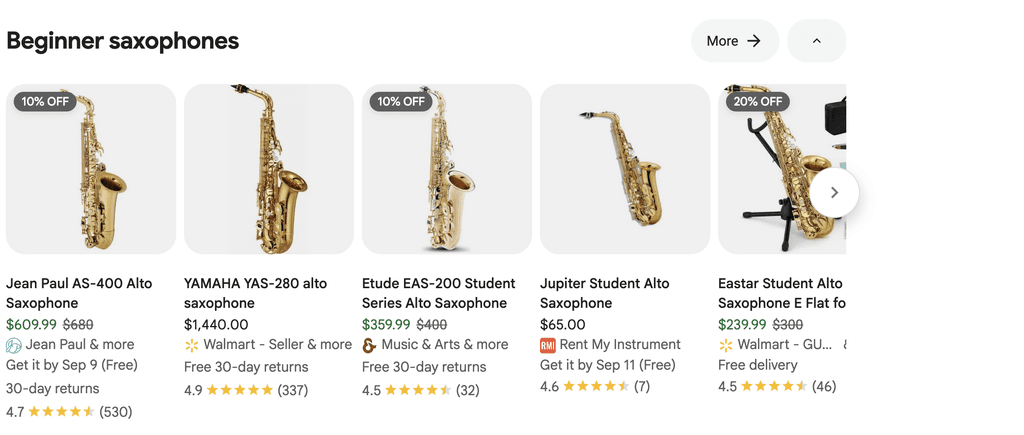
When McNeela decided to test the saxophone market, the odds were against us. Our reputation was built on Irish traditional instruments, which gave us authority in fiddles and flutes but none in saxophones. On Google Shopping, where buyers are already product aware and comparing for the best deal, we could not compete on price. Amazon sellers filled the low end with white-label saxophones, while specialist retailers dominated the mid-tier with credibility we simply didn’t have. Our early standalone listings struggled to convert, and it became clear that if we wanted to enter this market we needed more than just another product on the shelf.
When McNeela decided to test the saxophone market, the odds were against us. Our reputation was built on Irish traditional instruments, which gave us authority in fiddles and flutes but none in saxophones. On Google Shopping, where buyers are already product aware and comparing for the best deal, we could not compete on price. Amazon sellers filled the low end with white-label saxophones, while specialist retailers dominated the mid-tier with credibility we simply didn’t have. Our early standalone listings struggled to convert, and it became clear that if we wanted to enter this market we needed more than just another product on the shelf.
When McNeela decided to test the saxophone market, the odds were against us. Our reputation was built on Irish traditional instruments, which gave us authority in fiddles and flutes but none in saxophones. On Google Shopping, where buyers are already product aware and comparing for the best deal, we could not compete on price. Amazon sellers filled the low end with white-label saxophones, while specialist retailers dominated the mid-tier with credibility we simply didn’t have. Our early standalone listings struggled to convert, and it became clear that if we wanted to enter this market we needed more than just another product on the shelf.
02
Customer Insights
Customer Insights
Customer Insights
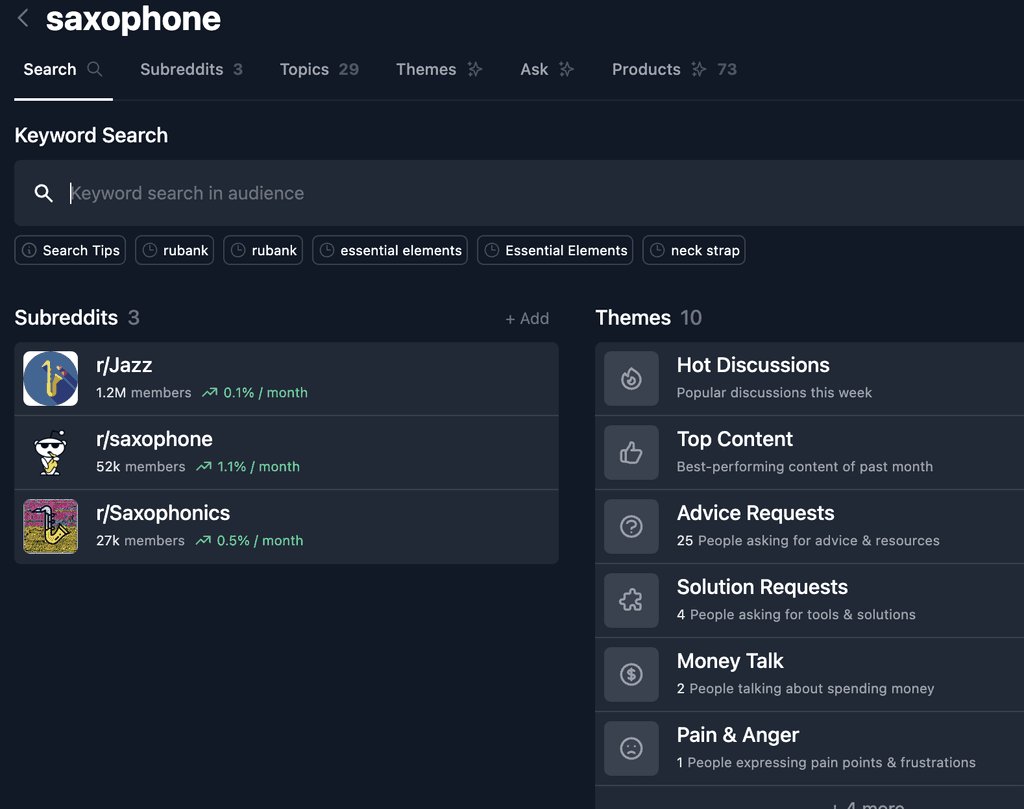
To better understand the category, I mapped out competitors and broke down their offers. I compared pricing, bundles, and positioning across specialist retailers, marketplace sellers, and low-cost Amazon listings. I also turned to Forums, Gummytree, and surveys with McNeela customers to hear directly from buyers. The research showed that most were beginners who didn’t know what extras they needed. Mouthpieces, reeds, neck straps, cleaning kits, and beginner books came up again and again. When brands like Yamaha and D’Addario were mentioned, trust immediately increased. This confirmed that the opportunity was not to undercut on price, but to compete on value by packaging a complete, credible beginner offer.
To better understand the category, I mapped out competitors and broke down their offers. I compared pricing, bundles, and positioning across specialist retailers, marketplace sellers, and low-cost Amazon listings. I also turned to Forums, Gummytree, and surveys with McNeela customers to hear directly from buyers. The research showed that most were beginners who didn’t know what extras they needed. Mouthpieces, reeds, neck straps, cleaning kits, and beginner books came up again and again. When brands like Yamaha and D’Addario were mentioned, trust immediately increased. This confirmed that the opportunity was not to undercut on price, but to compete on value by packaging a complete, credible beginner offer.
To better understand the category, I mapped out competitors and broke down their offers. I compared pricing, bundles, and positioning across specialist retailers, marketplace sellers, and low-cost Amazon listings. I also turned to Forums, Gummytree, and surveys with McNeela customers to hear directly from buyers. The research showed that most were beginners who didn’t know what extras they needed. Mouthpieces, reeds, neck straps, cleaning kits, and beginner books came up again and again. When brands like Yamaha and D’Addario were mentioned, trust immediately increased. This confirmed that the opportunity was not to undercut on price, but to compete on value by packaging a complete, credible beginner offer.
03
The Strategy
The Strategy
The Strategy
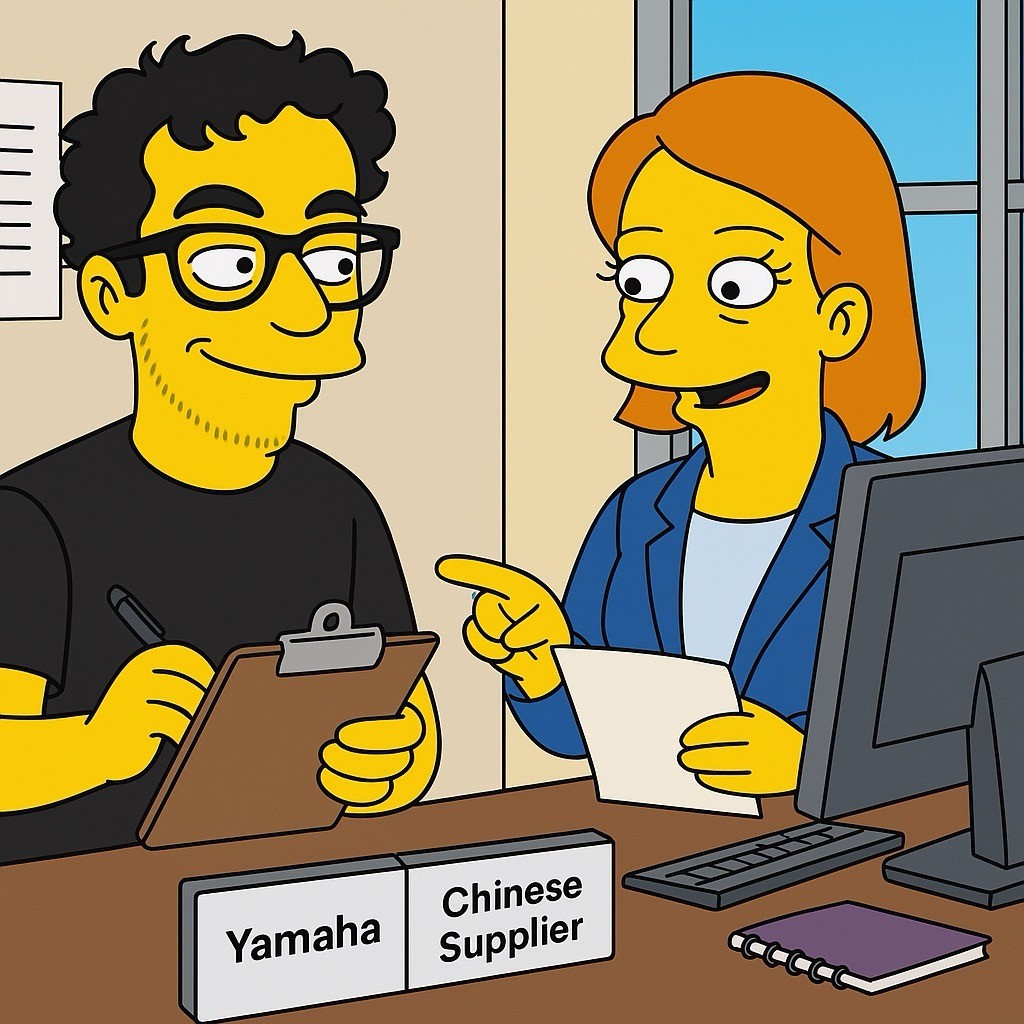
The goal was to remove beginner hesitation by bundling saxophones with the right accessories. Rather than leaving players to figure out what else to buy, we built packages designed to answer those questions before they were asked. I worked closely with the operations manager to source the right mix. Where credibility mattered most, such as mouthpieces and reeds, we used premium brands like Yamaha and D’Addario. For accessories where brand mattered less, such as straps and cleaning kits, we sourced directly from Chinese suppliers. We knew this meant taking a hit on margin, but the bet was that volume could make up for it. The positioning was clear: everything you need to start playing today, backed by trusted names where it counted.
The goal was to remove beginner hesitation by bundling saxophones with the right accessories. Rather than leaving players to figure out what else to buy, we built packages designed to answer those questions before they were asked. I worked closely with the operations manager to source the right mix. Where credibility mattered most, such as mouthpieces and reeds, we used premium brands like Yamaha and D’Addario. For accessories where brand mattered less, such as straps and cleaning kits, we sourced directly from Chinese suppliers. We knew this meant taking a hit on margin, but the bet was that volume could make up for it. The positioning was clear: everything you need to start playing today, backed by trusted names where it counted.
The goal was to remove beginner hesitation by bundling saxophones with the right accessories. Rather than leaving players to figure out what else to buy, we built packages designed to answer those questions before they were asked. I worked closely with the operations manager to source the right mix. Where credibility mattered most, such as mouthpieces and reeds, we used premium brands like Yamaha and D’Addario. For accessories where brand mattered less, such as straps and cleaning kits, we sourced directly from Chinese suppliers. We knew this meant taking a hit on margin, but the bet was that volume could make up for it. The positioning was clear: everything you need to start playing today, backed by trusted names where it counted.

04
Execution
Execution
Execution
Rolling out the bundles required careful planning. Unlike our traditional instruments, which are often refined by in-house luthiers, McNeela had no saxophone repair specialists on staff. That meant we couldn’t adjust or fine-tune the instruments in the same way, so we moved slowly. Before the launch, I coordinated with the fulfilment team to ensure the correct bundles would be sent out to customers without error. To validate the concept, we used Varify.io to test the new bundles above the fold and capture early conversion data. The aim was not just to generate sales but to run a measured test that could show whether saxophones could become a viable category for McNeela long-term.
Rolling out the bundles required careful planning. Unlike our traditional instruments, which are often refined by in-house luthiers, McNeela had no saxophone repair specialists on staff. That meant we couldn’t adjust or fine-tune the instruments in the same way, so we moved slowly. Before the launch, I coordinated with the fulfilment team to ensure the correct bundles would be sent out to customers without error. To validate the concept, we used Varify.io to test the new bundles above the fold and capture early conversion data. The aim was not just to generate sales but to run a measured test that could show whether saxophones could become a viable category for McNeela long-term.
Rolling out the bundles required careful planning. Unlike our traditional instruments, which are often refined by in-house luthiers, McNeela had no saxophone repair specialists on staff. That meant we couldn’t adjust or fine-tune the instruments in the same way, so we moved slowly. Before the launch, I coordinated with the fulfilment team to ensure the correct bundles would be sent out to customers without error. To validate the concept, we used Varify.io to test the new bundles above the fold and capture early conversion data. The aim was not just to generate sales but to run a measured test that could show whether saxophones could become a viable category for McNeela long-term.
05
Results
Results
Results
The results were mixed and more complex than expected. In most cases, the bundles actually performed worse than the standalone listings, showing that added value did not automatically increase conversions. On one model, add-to-cart rates decreased, but the checkout rate improved, suggesting that while fewer people added the bundle, those who did were more committed to completing their purchase. This revealed that beginners may still hesitate at a higher upfront price, but when they did accept the bundle, the reassurance of a complete package gave them the confidence to follow through. While not the immediate lift we had hoped for, the test delivered valuable insights into buyer behaviour and offered a clear path for refining future offers.
The results were mixed and more complex than expected. In most cases, the bundles actually performed worse than the standalone listings, showing that added value did not automatically increase conversions. On one model, add-to-cart rates decreased, but the checkout rate improved, suggesting that while fewer people added the bundle, those who did were more committed to completing their purchase. This revealed that beginners may still hesitate at a higher upfront price, but when they did accept the bundle, the reassurance of a complete package gave them the confidence to follow through. While not the immediate lift we had hoped for, the test delivered valuable insights into buyer behaviour and offered a clear path for refining future offers.
The results were mixed and more complex than expected. In most cases, the bundles actually performed worse than the standalone listings, showing that added value did not automatically increase conversions. On one model, add-to-cart rates decreased, but the checkout rate improved, suggesting that while fewer people added the bundle, those who did were more committed to completing their purchase. This revealed that beginners may still hesitate at a higher upfront price, but when they did accept the bundle, the reassurance of a complete package gave them the confidence to follow through. While not the immediate lift we had hoped for, the test delivered valuable insights into buyer behaviour and offered a clear path for refining future offers.

Key Learnings
This project proved that even the strongest market research does not guarantee success once an offer goes live. On paper, the thesis held up — beginners wanted bundles, branded accessories added credibility, and competitors seemed to leave space to compete on value. But from the beginning, the economics of the category made it an uphill battle. Amazon flooded the market with cheap white-label saxophones, specialist websites competed aggressively at the mid-tier, and second-hand Yamahas offered a far stronger brand at a very similar price. Against that backdrop, McNeela’s position was always going to be difficult.
The test also exposed a bigger pattern. By moving into too many product categories at once, McNeela was stretching itself across audiences with completely different expectations. In saxophones, the lack of authority combined with thin margins made the challenge especially clear. A premium McNeela alto saxophone, even when bundled with strong accessories, still sat above the price of a second-hand Yamaha. That made it hard to convince buyers, no matter how carefully the offer was structured.
The lesson was that these kinds of experiments need to happen much earlier in the product decision process. McNeela had already committed to significant saxophone stock before testing whether the category was truly viable, which made the outcome more costly. Even today, the business continues to hold saxophone inventory that moves slowly.
At the same time, the bundling strategy itself proved useful. Pairing instruments with books and beginner-friendly accessories has since been applied successfully in categories where McNeela already has credibility, such as banjos. In those cases, bundles have strengthened offers that were already working.
Still Curious?
Quick answers about the project and process.
Did the bundles work?
Did the bundles work?
Did the bundles work?
Why did you test bundles at all?
Why did you test bundles at all?
Why did you test bundles at all?
What happened with the stock?
What happened with the stock?
What happened with the stock?
Would you do anything differently next time?
Would you do anything differently next time?
Would you do anything differently next time?
Want to Learn More?
Let’s chat about how I can help your brand grow.

Want to Learn More?
Let’s chat about how I can help your brand grow.
Want to Learn More?
Let’s chat about how I can help your brand grow.